Epoxy-Coating Your Garage Floor in Summer 2026: The Temperature Window, the Prep Nobody Does, and the Curing Mistake That Peels Everything Off
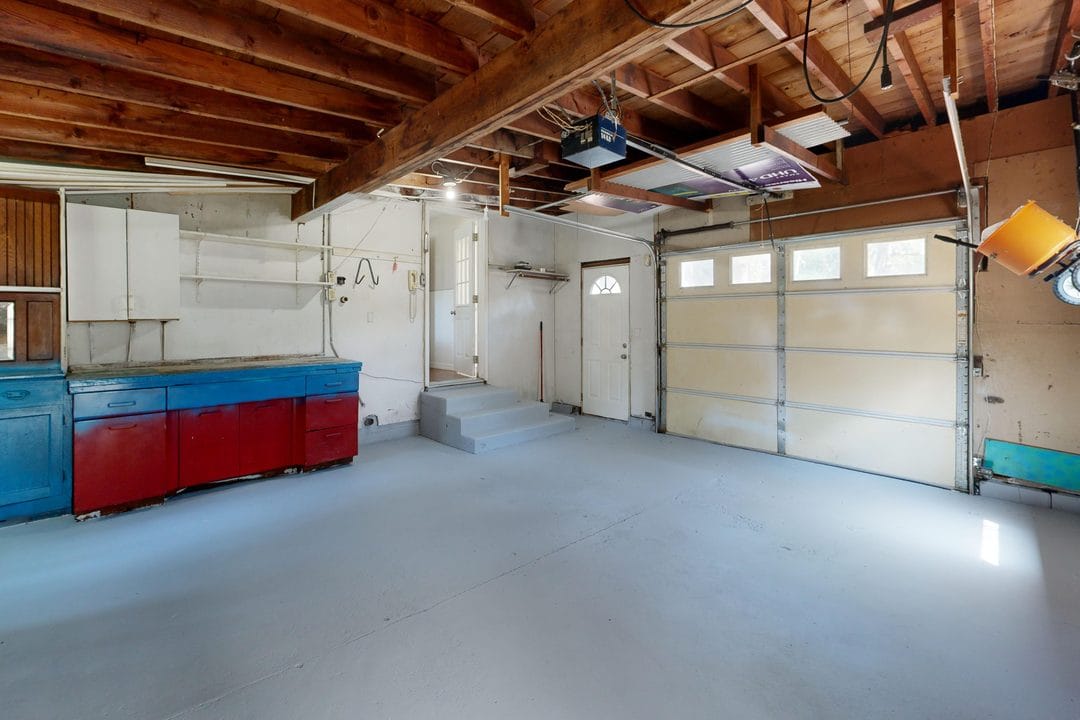
Walk through any subdivision built since 2005 and you'll find garage floors with epoxy that's lifting at the edges, bubbling near the door, or flaking off in dinner-plate sheets under the tires. Almost none of those floors failed because the homeowner bought a bad kit. They failed because of what happened in the four hours before the coating went down, and in the three days after. Summer is the season most people finally tackle this project, and it's also the season that punishes the two mistakes nobody warns you about.
Done right, a garage floor coating outlasts the car parked on it. I've seen a Rust-Oleum kit from 2014 still holding tight in a Phoenix garage that hits 115 degrees by August. The difference between that floor and the peeling ones isn't money or brand. It's moisture, surface profile, and patience during cure.
Why summer is both the best and worst time to do this
Epoxy needs warmth to cure, and summer gives you that for free. Most consumer two-part epoxies want a surface temperature between 60 and 85 degrees Fahrenheit while you roll and for the first 24 hours after. Below 55, the resin thickens, self-leveling stops, and the chemical reaction crawls. Above 90, you get the opposite problem: the pot life collapses, and a batch that should give you 40 minutes of working time turns to taffy in 15.
The trap is that garage slab temperature lags air temperature by hours. On a 95-degree July afternoon, your concrete might still be reading 78 from the cool night before, which sounds perfect. But if you start coating at 4 p.m. and the slab keeps climbing as the day's heat finally soaks in, your second coat could be going down on an 88-degree surface that's actively off-gassing. That off-gassing is what creates the pinhole bubbles you see in failed floors. Coat in the morning, not the evening, so the slab is warming toward your working range rather than past it.
Humidity matters as much as heat, and this is where the Gulf Coast and the Southeast get burned. Epoxy will not bond to a damp slab, and concrete pulls moisture up from the ground continuously. A July day at 80 percent relative humidity in Houston can leave a thin film of condensation on a slab that looks bone dry to the eye.
The plastic-sheet test that costs nothing
Before you buy a single thing, do this. Tape a two-foot square of clear plastic sheeting to your bare concrete, sealing all four edges, and leave it overnight. If there's condensation on the underside in the morning, or the concrete underneath has darkened, you have a moisture problem. Coating over that slab is throwing money on the floor. You either need a moisture-mitigation primer rated for the job or you need to wait for a drier stretch. The test takes ninety seconds to set up and saves you a thousand dollars of regret.
Prep is 80 percent of the job, and degreasing isn't it
Here's the part that separates floors that last from floors that peel: epoxy doesn't glue to concrete, it grips into it. A troweled or power-floated garage slab is sealed tight at the surface, almost glassy, and a coating laid over that smooth skin has nothing to bite. This is the number-one reason DIY floors fail, and no amount of cleaning fixes it.
You have two ways to open up the surface. The first is acid etching, the method that comes in most kits, using a citric or muriatic acid wash that eats a slightly rough profile into the concrete. It works, but it's inconsistent, it does nothing on slabs that have ever been sealed, and the spent acid is a hassle to neutralize and rinse. The second is mechanical grinding with a rented concrete grinder and a diamond cup wheel, which Home Depot and Lowe's both rent for around $60 to $90 a day. Grinding gives you a uniform, predictable profile every time.
Grind. If you do nothing else differently from the kit instructions, rent the grinder instead of trusting the acid. The acid bottle in the box is there because it's cheaper to ship than to tell you to rent a machine, not because it works better.
The sequence that actually holds up looks like this:
- Pull everything out and sweep, then attack oil stains with a dedicated degreaser like Oil Eater or Krud Kutter — old oil that soaked deep will keep wicking up and breaking the bond, so a surface wipe isn't enough.
- Grind the entire slab, including the corners and the two feet right inside the garage door where tire wear is heaviest.
- Vacuum with a shop vac, then go over it again, because grinding dust is fine enough to ruin adhesion all by itself.
- Patch cracks and spalled spots with a concrete repair epoxy and let them cure fully before you coat — skipping the cure here is a slower version of the same mistake people make with the topcoat.
- Run the plastic-sheet moisture test if you haven't already, and only then open the resin.
That last point about cracks deserves a flag. A hairline crack you coat over will telegraph right through the epoxy within a season as the slab moves, and once the coating cracks, water gets under it and the peeling starts. Fix the slab first or accept that you're coating a problem.
What it actually costs in 2026
Prices have settled down from the 2022 spikes, and a garage floor coating is one of the better value home projects right now. For a standard two-car garage of roughly 400 to 450 square feet, here's the realistic spread.
A water-based epoxy kit like Rust-Oleum's RockSolid or the Behr Premium 1-Part Epoxy runs $120 to $250 and covers most two-car garages in one or two coats. These are forgiving for a first-timer and the most common choice on the shelf at Home Depot. The catch is that one-part products are technically a coating, not a true epoxy, and they won't take the abuse a real two-part system will — fine for a garage you walk through, marginal for one where you wrench on cars or drag a floor jack around.
A true two-part 100-percent-solids epoxy, the commercial-grade stuff, costs more in materials, often $300 to $600 for the garage plus a polyaspartic or polyurethane topcoat, but it's the floor that lasts fifteen years. Add the grinder rental, a decent 3/8-inch nap roller, a spiked shoe set so you can walk the wet floor to broadcast flakes, and you're looking at $400 to $800 all in for a job a contractor would quote at $2,500 to $5,000. The labor savings here are real, which is exactly why this project is worth doing yourself if you have a free weekend and the patience to prep properly.
The curing mistake that undoes everything
You've ground the slab, the moisture test was clean, the coat went down glassy and even, and the flakes landed perfectly. Then you park the truck on it Sunday night because the kit said "walk in 24 hours." That sentence is where most good prep dies.
Walk time and cure time are not the same thing, and the kit prints walk time because it's the friendlier number. Epoxy reaches full chemical cure — the hardness it needs to take a hot tire without lifting — in seven days, not one. Foot traffic at 24 hours is usually fine. Putting a vehicle on it before five to seven days, especially a vehicle whose tires are warm from driving, causes hot-tire pickup: the warm rubber bonds to soft epoxy and pulls a patch of it up when you back out. Those bare circles in the middle of otherwise perfect garage floors? That's almost always a car parked too soon.
Summer heat speeds the cure, which tempts people to rush it further, but it doesn't shrink the seven-day window as much as you'd hope. Give it the week. Park in the driveway, ignore the floor, and let the chemistry finish. If you put a polyaspartic topcoat over the epoxy, that layer hardens faster and buys you back a couple of days, which is one more reason the two-part-plus-topcoat route is the one I'd push you toward if the garage sees real use.
Flakes, sheen, and the choices that don't matter much
Most of what people agonize over at the store barely affects how long the floor lasts. Decorative flakes — the color chips you broadcast into the wet coat — are almost pure aesthetics, though they do hide dust and hairline imperfections and add a little slip resistance, so I'd use them. A full broadcast where you bury the surface in chips reads as more polished than the light scatter that comes standard in most kits.
Sheen is personal. High-gloss looks like a showroom and shows every speck of dirt and every tire scuff. A satin or matte topcoat hides daily grime and is easier to live with, especially in a garage that's also a workshop. Anti-slip additive is worth the few dollars if your garage floor gets wet from snowmelt or a hose, because cured epoxy is genuinely slick when it's wet — a real consideration in the northern half of the country where winter brings melting slush off the car all season.
None of those choices will save a floor that went down over a damp, smooth, freshly-coated slab parked on too early. Get the slab right, give it the week, and the color you picked will still look sharp when the next car you buy is sitting on it.