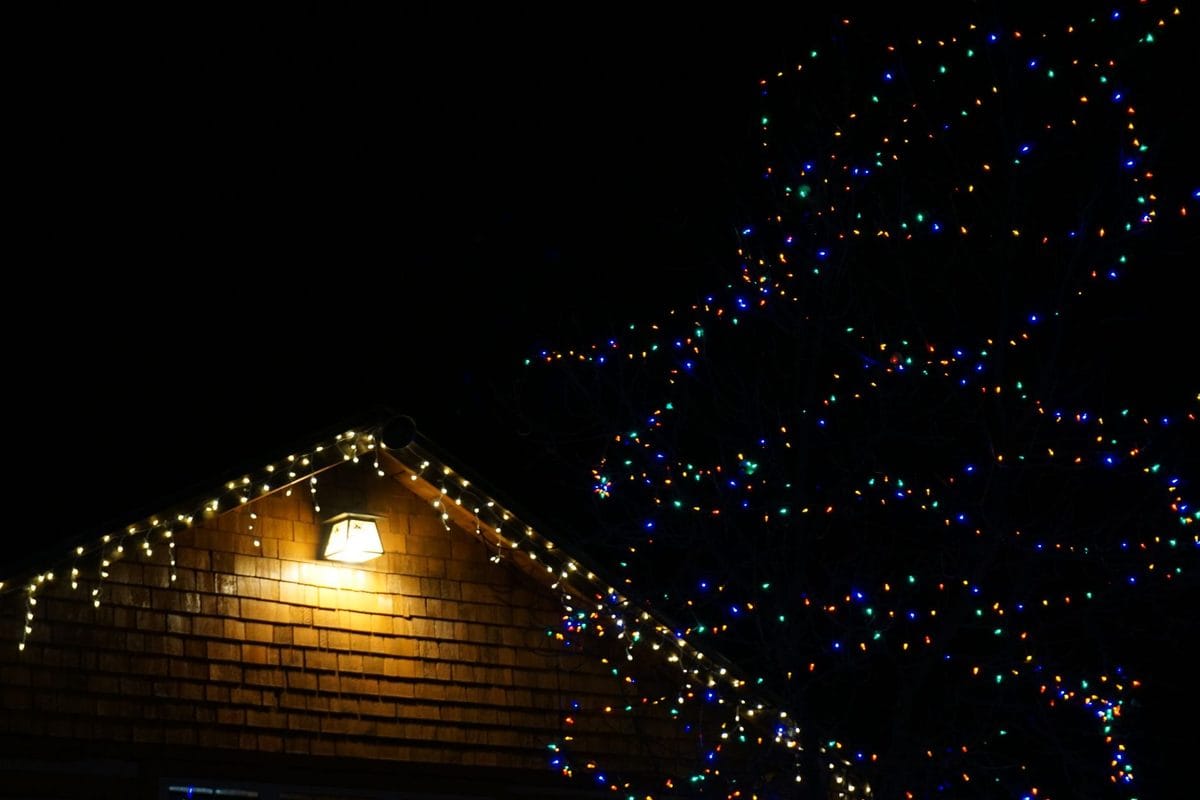
Every late October, the garage shelf of tangled strands comes down and goes up on the gutters, the shrubs and the front porch. Most of those strands get plugged in without a second look. The National Park Service's holiday fire safety page, which relies on National Fire Protection Association (NFPA) figures, is aimed at exactly that habit. According to the NFPA numbers it cites, holiday decorations other than Christmas trees cause about 790 home fires a year in the United States, resulting in one civilian fire death, 26 civilian injuries and $13 million in direct property damage. The NPS page does not say which year the fire data covers, so read those totals as a sense of scale rather than an exact annual count.
The Three-Strand Rule Is the Number to Remember
Link no more than three mini-light strands together, or no more than 50 screw-in bulbs. That is the limit the NPS passes on from NFPA guidance, and it is the one most homeowners break without noticing. Each strand carries current through its own thin wire, and linking them stacks that load onto the first connection. The NPS guidance says wires should not feel warm, so the practical check is simple: if a wire or plug feels warm during use, unplug the set and find out why before you switch it on again.
Some LED sets print their own connection limit on the package, and that printed number is the one to follow. When the box allows fewer strands than the three-strand rule, the box wins. The rule is a ceiling for the sets it was written about, not a permission slip for every product on the shelf.
Outdoor Means Rated for Outdoor, Not Just Sturdier
Indoor lights are not built for rain, snow or freezing temperatures, and the NPS says so directly: indoor strands are cool enough for a tree but are not designed for outdoor conditions. Outdoor strands carry a UL or FM listing for cold and wet conditions, and they tend to burn hotter than indoor sets. A heavier-looking indoor strand is no substitute for that listing, because the listing is what covers the weather.
Check the tag on the plug or the strand itself for the UL or FM listing and an outdoor label. A strand without one stays indoors, however sturdy the wire feels. Keep the outdoor sets in their own labelled box, so nobody grabs the indoor ones by mistake when the ladder is already up.
Cords, Outlets and the Route Across the Lawn
Extension cords are where most of the trip hazards live. The NPS advice is to keep cords out from under carpets, away from doorways and high-traffic paths, and clear of anywhere furniture can pinch them. A cord hidden under a rug is out of sight, which means nobody notices when its insulation wears through, and the people who walk over it every day are the ones who get hurt.
The NPS also recommends plugging decorations into permanent outlets installed by a professional electrician, instead of chaining cords to the nearest window. That is harder in an older house with two outlets on the porch, and it is the reason a long run to the roofline needs more thought. Match the cord's gauge and rating to the total draw of the set, and read those figures off the cord's own label. The NPS page gives no gauge or length limit, so the label is the only source you can trust for them.
Unplug all the lights before you leave the house or go to bed, which is also on the NPS list. A plug-in timer that cuts power overnight takes the question off your mind, but it does not replace the inspection that has to come before the first switch-on.
Plan the route before you buy the cord. Walk the path from the outlet to the farthest light and mark every point where the cord would have to cross a walkway, a doorway or a planting bed. If the only route crosses a doorway, a second outlet or a second short run is the better fix than a strip of tape over the cord. Tape hides the cord, but it does nothing about the heat or the trip hazard underneath it.
Inspect Before the First Switch-On
Run through the box before anything goes up. Look for cracked lamp sockets, bare or split insulation and loose bulbs. Discard any strand that is damaged, as the NPS advises, rather than keeping it for one more season. A set that worked last December can still have a fault that only shows once it is plugged in, so test each strand indoors on a table before it goes up.
Keep a short note inside each storage box that says which strands are indoor, which are outdoor and how many sets link together. When the ladder is already up, that note answers the three-strand question without guesswork, and it stops a fresh box from being mixed in with the old one.
Hang the lights with clips, not nails, which the NPS also recommends.
Do not use electric lights on a metallic tree, as the NPS states outright. Both rules cost nothing to follow, and they are the ones people most often skip when they have always hung lights a certain way.
Candles and Trees Belong on the Same Checklist
Holiday decoration fires do not all start with a plug. The NPS guidance is that candles should stay at least 12 inches from anything that can burn, never be left unattended, and sit in nonflammable, non-tip holders before they are lit. Keep them away from children and pets, and never put a candle on or near a tree. The holder is the cheapest part of that fix, and it is the one most people skip.
The tree has its own rules. Pick a fresh one and bounce the trunk on the ground before you buy it: if a lot of needles drop, the tree is too dry. Cut a couple of inches off the base before setting it up, keep the stand filled with plain water at all times, and keep the tree away from fireplaces and heating vents. The NPS says not to keep a tree up longer than two weeks, and not to burn the old one in a fireplace or wood stove once the needles start to fall. Wrapping paper does not belong in the fireplace either, however tempting it is to clear a pile of boxes that way in January.
What Goes in the Trash, Not on the Gutter
The safest strand is the one you decide not to use. A set with a warm plug, a cracked socket or a loose bulb belongs in the recycling or the trash, even if it cost less than a takeout dinner and even if it still lights up when you test it. The NPS is clear that damaged strands should be discarded, and a light that comes on is not proof that the wiring is sound.
Before the ladder comes out this year, count the strands you plan to link, check the outdoor label on each one, and walk the cord route with your hand. Any cord that runs under a rug, across a doorway or through a path needs to be moved first. If one set cannot reach its outlet without a bridge across the walkway, leave that section dark and light the rest. The gutters can wait.