Fall Leaves in 2026: Mulch Them, Move Them or Haul Them, and Keep Them Out of the Street
Mulch them, rake them into beds, compost them or haul them: the right move depends on where each leaf lands, and one spot, the street, is always wrong. What Michigan State, the Xerces Society and EPA data say.
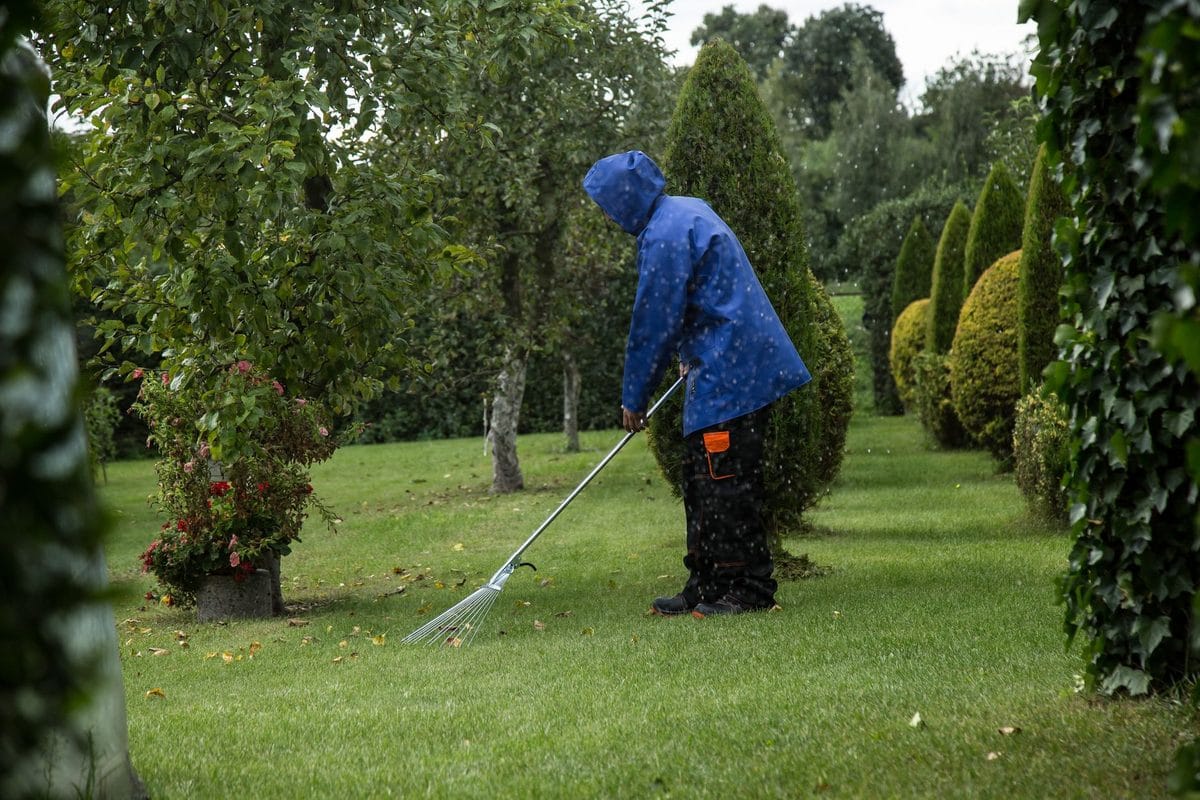
Picture the usual October Saturday: a rake, a blue tarp and a row of paper bags at the curb, while the maple next door keeps dropping fresh leaves on the patch of lawn you cleared an hour ago. The work is real, and for most lawns it is also optional. Michigan State University turf specialists began testing what happens when a mower grinds leaves up and leaves them in place after a ban on yard waste in the 1990s prompted the research. Their guidance now says the lawn comes out ahead, with quicker green-up in spring, less fertilizer and fewer weeds. That advice comes with a catch, because the right place for a leaf depends on where it landed. Grass wants one treatment, garden beds want another, the Xerces Society, an invertebrate-conservation nonprofit, wants a third, and your city's storm sewer wants no leaves at all. Depending on your latitude, the leaves are coming down now or will be within weeks, so the next two or three weekends are the time to pick a plan.
Mulch-mow the leaves that land on grass
Mulching is the least work and the best documented of the options. MSU's instructions are specific: start as soon as there is a thin layer of leaves on the lawn, raise the mower deck to its highest setting, mow as usual, and then mow again at a 90-degree angle to the first pass. Plan on repeating that roughly once a week, and more often if wind keeps dropping new leaves on the turf. According to MSU, leaves can be mulched up to about six inches deep with good results; a mulching mower can take that in one pass, a conventional mower may need several trips, and a push mower handles smaller amounts but still works. The shredded pieces sift down through the grass instead of matting on top of it, and over the winter they decompose into nutrients, which is how MSU's researchers saw lawns green up faster in spring on less fertilizer. The weed result draws the most attention: MSU's write-up says experience has shown a decrease of nearly 100 percent in dandelions and crabgrass after three years of mulching leaves into the turf, because the decomposing bits fill the bare spots where weed seeds would otherwise germinate.
If your mower cannot mulch, a new blade is the cheap fix. Home Depot listed a Powercare 21-inch mulching blade, sold for many MTD, Cub Cadet, Troy-Bilt and Craftsman mowers, at $29.68 on Oct. 7, and since blades are model-specific, match the part to your mower's model number before you buy. Mulch-mow what lands on grass and skip the rake there. The one thing to avoid is letting a deep layer of whole leaves sit on turf all winter, since MSU notes that leaves piled up under wet, heavy snow can spell disaster for the grass underneath. And because MSU also calls fall the best time to feed a lawn, the same October weekends can cover the fertilizer pass too.
Where the mower is the wrong tool
The Xerces Society objects to shredding leaves at all. Most butterflies and moths do not migrate, it points out; they spend the winter in the yard as an egg, a caterpillar, a chrysalis or an adult, and luna moths and swallowtails even make cocoons and chrysalises that pass for dried leaves. A mower deck grinds those up along with everything else, and the society says shredded leaves give less winter cover than whole ones. MSU's turf research and Xerces's habitat advice pull in opposite directions here, and neither is wrong, because they mostly describe different parts of the yard.
Our recommendation: rake the leaves from the lawn's edge into garden beds and around the base of trees and shrubs, whole, and mulch-mow whatever is left on the grass. Xerces says a thin layer of leaves is healthy for grass anyway, and that leaves raked into beds suppress weeds, hold moisture and add nutrition, while perennials get winter insulation out of them. MSU's advice for lawns is to chop leaves finely so they do not mat together, and whole leaves in a bed can mat the same way, so rake them in loosely instead of tamping them down. Xerces also asks gardeners to wait until late spring to clear beds out, because tidying too early destroys the animals the leaves were sheltering.
A leaf pile or compost bin for the overflow
Plenty of yards drop more leaves than their beds can take. For the overflow, Nebraska Extension treats dry leaves as the carbon-rich "brown" half of a compost pile and grass clippings as the nitrogen-rich "green" half, and it lets fruit and vegetable trimmings, coffee grounds and eggshells in as well. Meat scraps, bones, grease, whole eggs and dairy stay out, because they attract wildlife and upset the microbes doing the work. The best size for an enclosed pile is 4 by 4 by 4 feet: smaller dries out too fast, and larger gets poor airflow and becomes hard to turn. With finely chopped material, regular turning and steady moisture, Nebraska Extension says a pile can be ready in four to six months, while a bin left alone with unshredded leaves can take a year or longer.
A bin is not the only route. Xerces suggests a plain leaf pile in a corner of the yard, left intact so millipedes, roly-polys and other leaf-eaters do the breaking down, or feeding leaves into an existing compost pile a little at a time. Nebraska Extension's timeline for an unattended pile applies here, so expect a year or more, but the pile needs no turning and it keeps some habitat standing through the winter.
Hauling leaves away: bags, city pickup and the national numbers
Some yards simply produce more leaves than any bed or bin can absorb, and hauling is the honest answer there. Home Depot's own 30-gallon paper lawn and leaf bags ran about 50 to 56 cents apiece in five-packs on its website this week, with the price shifting a few cents between listings. City programs vary a lot: some pick up loose leaves raked to the curb, some insist on paper bags, and some only accept leaves at a drop-off site, so read your city's page before buying anything. The destination matters more than the container. EPA counted 35.4 million tons of yard trimmings, a category that covers leaves, grass clippings and brush, in the nation's municipal solid waste in 2018, the latest year on its materials data page, which was 12.1 percent of all MSW generated. About 22.3 million tons of that, a 63 percent rate, was composted or mulched, while landfills received roughly 10.5 million tons. Leaves that reach a municipal compost program belong to the first group, and leaves left out with the regular trash can end up in the second.
The one place leaves should never go: the street
A leaf blown into the gutter is not a leaf you got rid of; it is a leaf you handed to the storm sewer.
Leaves that wash off pavement do not stop at the curb. They clog storm drains, or they decompose in the runoff and send a pulse of nutrients into nearby lakes, rivers and streams, which feeds summer algae blooms, according to the University of Minnesota Water Resources Center. A 2016 study of two neighborhoods in Madison, Wisconsin, by researcher William Selbig found that nearly 60 percent of the annual phosphorus in their stormwater came from fall leaf litter, and that removing leaves from streets promptly could cut phosphorus concentrations by 80 percent. A 2020 follow-up across Madison, Fond du Lac and Oshkosh found that weekly fall street sweeping reduced phosphorus loading to local water bodies by 65 to 70 percent, with negligible effect on nitrogen. The researchers also noted almost no benefit to collecting leaves without sweeping the streets as well. Those are Wisconsin neighborhoods, so treat the percentages as a measure of how large the problem can get rather than a promise for your block. What carries over is the mechanism: a leaf that sits on pavement until a hard rain can be washed toward the nearest storm drain.
So keep the curb line clear. Rake or blow leaves away from the street, not toward it, and send them to whichever of the options above fits the spot. The University of Minnesota's guidance is to rake and sweep leaves out of the street in front of your home and into yard waste or compost. It adds that in Minnesota it is illegal to dump leaves in the garbage or in wetlands, ditches and ravines; other states and cities have their own dumping rules.
Before the next forecast storm, walk the curb in front of your house with a rake. Pull any leaf mat off the storm-drain grate with the rake from the curb, stay out of traffic, leave the grate itself in place, and put what you collect in the bed, the pile or the bag.