Basement Humidity Control in Peak Summer 2026: The Dehumidifier Sizing and EPA Mold Numbers That Actually Prevent a Flood-Level Repair Bill
A basement doesn't need a flood to grow mold — it just needs humidity above 60% for a few days. Here's how to size a dehumidifier, read the EPA's numbers, and back up your sump pump before the next July storm.
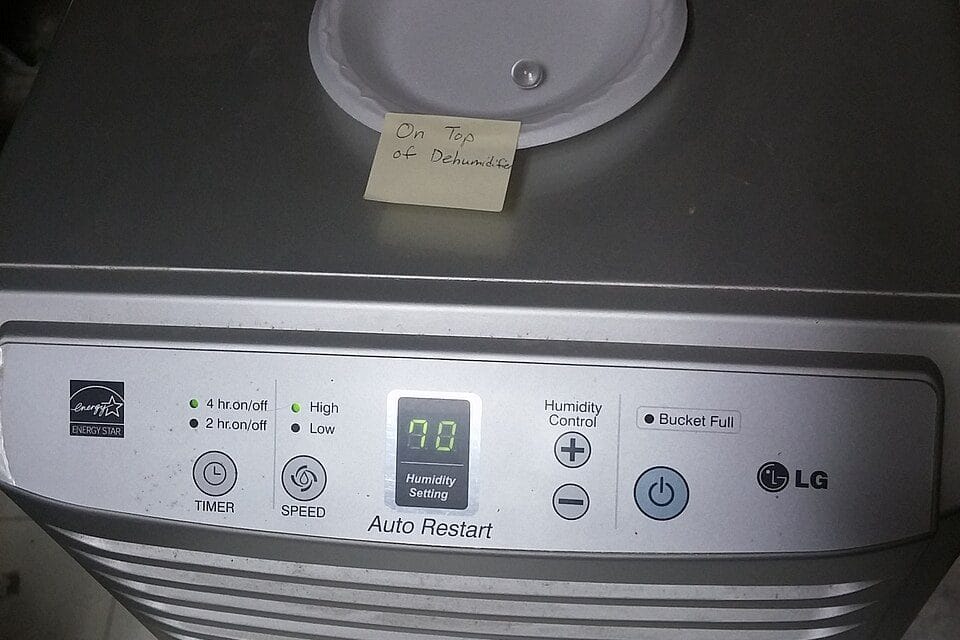
Open the basement door in the middle of July and you smell it before you see anything — that faint mustiness that wasn't there in April. Most homeowners chalk it up to "old house smell" and close the door again. That smell is condensation forming on cool concrete faster than it can evaporate, and by the time it's visible on drywall or framing, mold colonies have usually had two to three weeks to establish themselves.
Why July Turns Basements Into Petri Dishes
Outdoor dew points in most of the country climb into the 65–75°F range from late June through August, and that moisture-saturated air pours into basements every time a door opens, a dryer vents indoors, or a foundation crack lets ground moisture wick through. Concrete stays several degrees cooler than the air above it because it's in contact with the earth, so warm humid air hits that cold surface and condenses — the same physics as a glass of iced tea sweating on a counter. A basement doesn't need a leak to grow mold. It just needs relative humidity above 60% for a sustained stretch, and most unconditioned basements sit at 70–80% all summer without anyone noticing. Central air conditioning helps upstairs but does almost nothing for a below-grade room that the return ducts barely reach, so a house can feel perfectly dry on the main floor while the basement sits at 78% humidity the entire season. Homes built before the 1990s make this worse, since older foundation footings and block walls were rarely built with the same moisture-control detailing that current codes require in most states.
The EPA's guidance on mold is blunt on this point: there's no such thing as a safe indoor mold level, because tolerance varies so much person to person, and the agency's official recommendation is to keep indoor relative humidity between 30% and 50% precisely to prevent growth before it starts, not to treat it afterward. That's a real number you can act on, not a vague guideline — buy a $12 hygrometer from Home Depot or Lowe's, set it on a shelf at knee height (humidity pools low), and check it weekly through August.
The Number That Actually Matters
Most people buy a dehumidifier when they see visible moisture, which is already too late to call it prevention. Watch the hygrometer instead — if it holds above 55% for more than three or four consecutive days, that's your trigger to run a dehumidifier, not the day you spot a musty smell or a water stain.
Signs You're Already Behind on This
A few tells separate "worth watching" from "act this week." Efflorescence — the white, chalky mineral deposit that shows up on concrete block walls — means water has already been moving through the masonry and evaporating on the surface, and it's a sign the foundation itself needs attention, not just the air above it. Wood framing that feels soft or springs back slowly under thumb pressure has likely been sitting in elevated humidity long enough for rot to start, well before any visible mold appears. And if cardboard boxes stored down there have gone soft or warped at the corners, that's usually the first physical evidence most homeowners actually notice, months after the humidity problem began. Musty odors that fade when the HVAC kicks on but return within an hour are another reliable sign, since it means the air handler is masking the smell rather than actually removing the moisture source. Check exposed nails or metal fasteners for surface rust, too — bare metal corroding in a finished space is a humidity reading in itself, no hygrometer required.
Mold remediation companies in most metro areas charge $1,500–$3,000 for a contained area under 500 square feet with professional containment, HEPA air scrubbing, and antimicrobial treatment — and that figure climbs fast if the mold has reached wall cavities or HVAC ductwork, sometimes past $10,000 for a whole-basement job. Compare that to the $230 dehumidifier and $12 hygrometer this article keeps coming back to, and the math isn't close. Catching elevated humidity in July, before any colony actually forms, is the cheapest intervention available anywhere in this list.
Sizing a Dehumidifier So It Isn't Fighting a Losing Battle
Dehumidifier capacity is rated in pints removed per 24 hours at AHAM's standard test conditions (80°F, 60% RH), and undersizing is the single most common mistake homeowners make. A basement under 1,000 square feet with moderate dampness needs roughly a 30-pint unit; anything wetter than that — standing puddles after rain, visible condensation on pipes — pushes you toward a 50-pint model even in that same footprint. Frigidaire's 50-pint FFAP5033W1 runs about $230 at Home Depot and has a pump option that lets you drain straight into a floor sink instead of emptying a bucket every day, which matters more than people expect once you're running a unit continuously through July and August.
Skip the compact 20–22 pint units marketed for "large rooms" if you're actually treating a basement — they're built for bedrooms, not spaces with a slab floor and block walls constantly wicking ground moisture. A dehumidifier that's too small runs at 100% duty cycle and never brings humidity down past the low 60s, burning electricity for a result you can still smell.
Buy the bigger unit. It costs more upfront — the jump from a 30-pint to a 50-pint model is typically $60–$90 — but an undersized dehumidifier running constantly costs more in electricity over a single summer than that price difference, and it still won't get you under 50% relative humidity in a genuinely damp space.
Vapor Barriers: Where They Earn Their Cost and Where They're Wasted Plastic
A crawl space with exposed dirt floor is a humidity generator, full stop — soil under a house releases moisture continuously, and covering it with a proper vapor barrier is one of the highest-return jobs in this entire category. Stego Wrap's 10-mil crawl space liner runs about $0.30–$0.45 per square foot at building supply stores, and a typical 1,000-square-foot crawl space costs $400–$700 in material if you're installing it yourself, taped at seams and run 6–12 inches up the foundation walls.
A finished basement with a poured slab is a different story. The slab itself already blocks ground moisture from rising directly through the floor in most cases, so a full plastic vapor barrier laid over existing flooring does very little there — the moisture problem in a finished basement is almost always airborne humidity condensing on cool surfaces, not moisture wicking up through six inches of concrete. Spend that money on the dehumidifier instead, or on sealing the sill plate and rim joist where actual air leakage happens.
Sump Pump Backup: The Part Everyone Skips Until It's Too Late
A single sump pump is a single point of failure, and July thunderstorms are exactly when it fails — heavy rain overwhelms the pump at the same moment a power outage from storm damage cuts electricity to the house. A battery backup sump pump system, like the Zoeller Aquanot Fit 508, adds roughly $400–$600 installed on top of a primary pump and runs entirely on a deep-cycle marine battery for 6–10 hours during an outage, which is usually enough to cover a storm and the hours immediately after it.
Water-powered backup pumps are the other route — no battery to maintain, no battery to fail after five years sitting unused, just municipal water pressure driving a second pump. They only work on city water with adequate pressure, though, so anyone on a private well needs the battery version regardless of preference.
Test whichever system you have before the season gets ahead of you: pour five gallons of water into the sump pit, pull the main breaker to simulate an outage, and confirm the backup actually engages. Skip this test and you won't find out the battery died two years ago until the exact week you needed it.
Encapsulation vs. Just Running a Dehumidifier in the Crawl Space
Full crawl space encapsulation — vapor barrier, sealed vents, dedicated dehumidifier, sometimes conditioned air tied into the HVAC system — runs $5,000–$15,000 professionally installed depending on square footage and access. That's a real number, and it's worth asking whether a $250 standalone dehumidifier and a $500 DIY vapor barrier gets you 80% of the benefit for a fraction of the cost.
In most cases, yes — for a crawl space that's dry apart from summer humidity, a vapor barrier plus a dehumidifier set to a humidistat handles the problem without the five-figure investment. Full encapsulation earns its cost when there's a standing water issue, visible wood rot in floor joists, or a family member with respiratory issues where air quality tied to the crawl space is a documented concern. Don't let a contractor sell you the full package for a problem a $230 dehumidifier and a weekend of your own labor would solve.
The Weekend Checklist Before the Rest of Summer Hits
- Buy a hygrometer and place it in the basement or crawl space at floor level — check weekly, act if it holds above 55% for several days running
- Size the dehumidifier to the space's actual dampness, not just square footage — go up a size class if you see any standing moisture
- Lay a 10-mil vapor barrier over exposed crawl space dirt, taped at seams, before doing anything else down there
- Test the sump pump's backup system now, with a real power-outage simulation, not a visual check of the wiring
- Check the dryer vent runs outside the house and not into the basement itself — a surprisingly common shortcut in older construction that dumps a load of humid air with every cycle
None of this is glamorous work, and it's easy to put off when nothing looks obviously wrong yet. But the basements that end up with a $3,000 mold remediation bill in September almost always started the summer at 75% relative humidity and a hygrometer nobody bought.