Sump Pump Maintenance and Battery Backup: The Storm-Season Test That Prevents a Flooded Basement
A sump pump that hasn't been tested in a year is a coin flip during the next big storm. Here's the bucket test, the battery backup math, and the code rules that keep it working when you need it most.
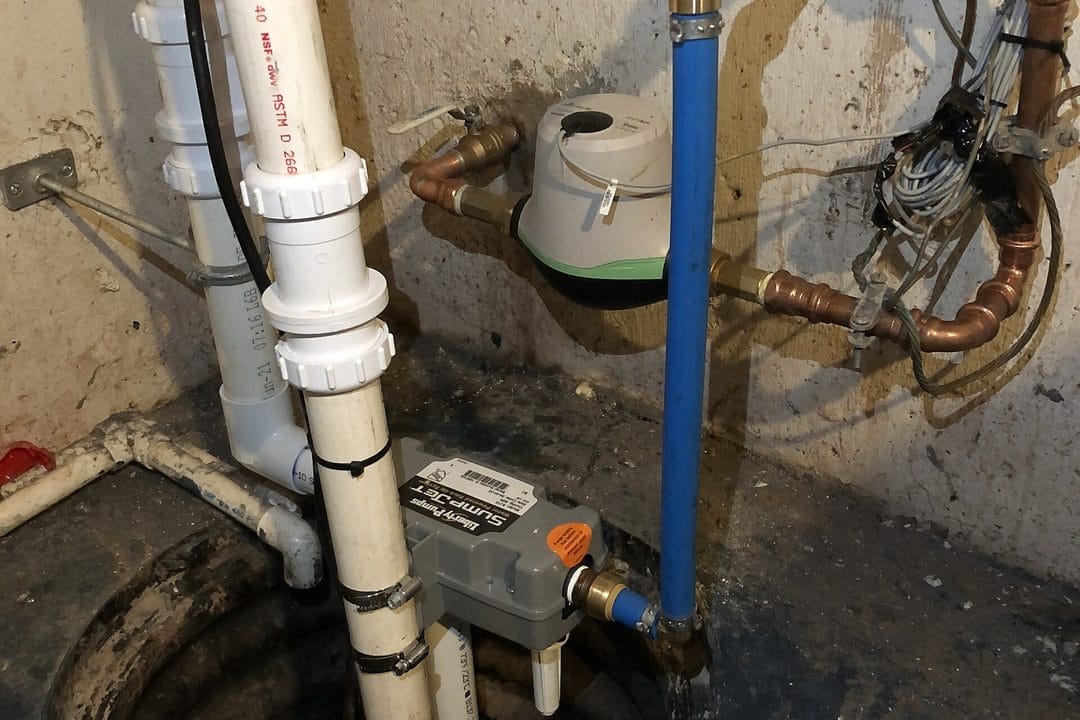
The Basement Doesn't Flood During a Dry Spell
It happens the same way almost every time: three inches of rain in six hours, the water table under your yard rises faster than the soil can drain it, and the sump pit in your basement corner fills up. If the pump kicks on, you never notice a thing. If it doesn't — because the float switch is stuck, the check valve failed, or the power went out with the storm — you find out at 2 a.m. when the carpet squishes underfoot. A pedestal sump pump from Home Depot runs $90 to $180. A ruined finished basement, drywall torn out to the studs and a dehumidifier running for two weeks, runs into five figures. That math is why this is the one piece of mechanical equipment in your house you should actually test on a schedule instead of ignoring until it fails.
Most homeowners install a sump pump once, during a basement finish or after a first flood scare, and then never touch it again until it doesn't turn on. That's backwards. Submersible pumps sit in standing water and debris for years at a time, and the float switch — the cheap plastic arm that tells the pump when to fire — is usually the first thing to seize up or get wedged against the pit wall. You don't need a plumber for the basic check. You need fifteen minutes and a five-gallon bucket.
The Five-Minute Test You Should Run This Weekend
Pour a bucket of water into the sump pit fast enough that the water level rises quickly, and watch what happens. The float should lift, the pump should kick on within a few seconds, and the water level should drop back down before the pump shuts off cleanly. Listen for grinding or a straining motor sound — that's usually a jammed impeller, and it means the pump is on its way out even if it's still moving water today. If the float arm scrapes the side of the pit instead of swinging freely, reposition the pump so it has clearance; a surprising number of "pump failures" are just a float that got knocked sideways during a basement storage reshuffle.
Run this test every three months, not just once a year before hurricane season. Pumps fail quietly — a worn bearing or a cracked impeller doesn't always announce itself with noise, and the only way to catch it early is to force the pump to actually move water on a schedule you control, not during the storm that's testing it for you.
What "normal" wear actually looks like
Expect five to seven years of service from a mid-range submersible pump running in a typical residential pit, less if your water table is high enough that the pump cycles daily rather than only during heavy rain. If yours is already past that window and you're seeing rust-colored water in the pit or hearing a new rattle on startup, replace it now rather than betting on one more season. WAYNE's CDU980E ($180–$220 at Lowe's) and Zoeller's M53 ($150–$190) are both common, well-reviewed cast-iron submersibles that hold up under frequent cycling — cast iron dissipates heat better than the plastic-bodied budget pumps and tends to outlast them by several years.
Battery Backup: When It's Actually Worth the Money
Here's the uncomfortable truth about primary sump pumps: they're useless the moment the power goes out, which is exactly when a lot of basement flooding happens, because the same storm that's dumping rain on your yard is also the one knocking down power lines. A battery backup system sits alongside your primary pump and takes over automatically when either the power fails or the primary pump can't keep up with the volume. Basement Watchdog's combination units run $250–$450 at Home Depot; a standalone battery backup like the Zoeller Aquanot 508 lands closer to $500–$650 installed.
Skip the backup if you live somewhere with a genuinely low water table and a basement that's never taken on water, even during the worst storm in the last decade — you'd be paying for insurance against a risk that doesn't apply to your lot. But if your basement is finished, if you store anything irreplaceable down there, or if your neighborhood loses power more than once or twice a year during storms, the backup pays for itself the first time it's needed. Don't buy the cheapest battery-only unit and assume it's equivalent to a combination system — a battery backup alone won't handle sustained heavy rain the way a mains-powered primary pump will, and marketing copy on the box tends to blur that distinction.
Battery maintenance nobody does
A backup system is only as good as its battery, and most homeowners install one, forget about it, and discover three years later that the AGM battery has lost most of its capacity sitting unused in a corner. Test the backup system's battery charge every six months (most units have a built-in indicator light) and plan on replacing the battery itself every three to four years regardless of how the indicator looks — sulfation degrades AGM batteries even when they're sitting in a trickle charger the whole time.
The Discharge Line Mistakes That Actually Violate Code
Where the water goes after it leaves the pump matters more than most DIY installs account for. Most state plumbing codes, adopted from the International Plumbing Code, require the discharge line to terminate to daylight, a storm sewer, or a drywell — tying a sump discharge into the sanitary sewer is prohibited in the large majority of jurisdictions, and it's the single most common code violation inspectors flag on sump installations. If your discharge line currently runs into a floor drain that connects to sanitary sewer, that's not a shortcut, it's a plumbing code violation that can also overload municipal treatment systems during storms — cities have gotten aggressive about enforcing this exact rule because combined sewer overflows during heavy rain are a real problem in a lot of older municipal systems.
The other mistake shows up every winter: a discharge line that daylights at ground level and then freezes solid, backing water up into the pump housing. Bury the line below the frost line where it exits the foundation, or install a freeze-resistant discharge fitting that vents excess pressure through a side port if the main line ices over. And always install a check valve close to the pump — without one, water in the discharge line drains back into the pit every time the pump shuts off, which means the pump short-cycles constantly and wears out years ahead of schedule.
NEC and the GFCI Outlet Almost Nobody Wires Correctly
This is the part that trips up even homeowners who did everything else right.
The 2020 National Electrical Code closed a loophole that used to let dedicated appliance receptacles — including sump pump outlets — skip GFCI protection in unfinished basements as long as they were on their own circuit. NEC 210.8(A)(5) now requires GFCI protection on that outlet regardless. A lot of homes built or renovated before 2020 still have the old ungrounded exemption wired in, and it's worth checking: if your sump pump plugs into a standard outlet with no GFCI test/reset buttons on it, or no GFCI breaker at the panel, that installation predates the current code and should be updated.
Wire the sump pump on its own dedicated 15- or 20-amp circuit, not shared with a dehumidifier, freezer, or shop equipment — a nuisance trip from an unrelated appliance shouldn't be able to take your pump offline during a storm. If you're not confident distinguishing a GFCI receptacle from a GFCI breaker at the panel, this is a fifteen-minute job for an electrician and not worth guessing on; a licensed electrician in most metro areas will charge $100–$200 to add or verify GFCI protection on an existing dedicated circuit.
Primary, Combination, or Battery-Only — What to Actually Buy
A primary-only submersible pump is the right call if your basement has never flooded, your water table is moderate, and your power rarely goes out for more than an hour. Step up to a combination system — mains-powered primary plus battery backup in one unit — if you've had even one close call, if the basement is finished, or if your area sees multi-hour outages during major storms. Skip battery-only setups entirely unless you're adding backup capacity to an already-solid primary pump; on their own, battery-only units typically can't sustain the pumping volume a serious storm demands for more than a few hours before the battery drains.
Water-powered backup pumps — the kind that run off municipal water pressure instead of a battery — are worth a mention only because installers sometimes push them as a maintenance-free alternative. They're not a good fit for most homes: they use a genuinely large amount of municipal water while running, they're banned outright in some jurisdictions with backflow-prevention requirements, and they only work at all if your water utility keeps supplying pressure during the same storm that's flooding your basement, which isn't guaranteed.
When to Call a Plumber Instead
DIY installation is realistic for swapping an existing pump for a same-size replacement in an existing pit — that's mostly disconnecting a discharge fitting, lifting the old pump, and dropping in the new one. Call a licensed plumber if you're adding a battery backup system to a home that's never had one, if the discharge line needs rerouting to fix a code violation, or if you're digging a new sump pit where one doesn't currently exist. Expect $500–$1,200 for a professional sump pump installation including a new pit and discharge line, depending on how far the line has to run to reach an approved discharge point.
One more thing worth doing before the next storm rolls through, and it costs nothing: clear leaves and debris away from wherever your discharge line daylights outside. A pump working perfectly can still flood your basement if the water it's pushing out has nowhere to go because the outdoor discharge point is buried under mulch or blocked by a downspout extension pointed the wrong way.