Deck and Porch Safety: The Inspection Checklist to Run Before Summer
A practical, room-by-room walkthrough for checking your deck or porch for rot, loose railings, and structural problems before the season's first big cookout.
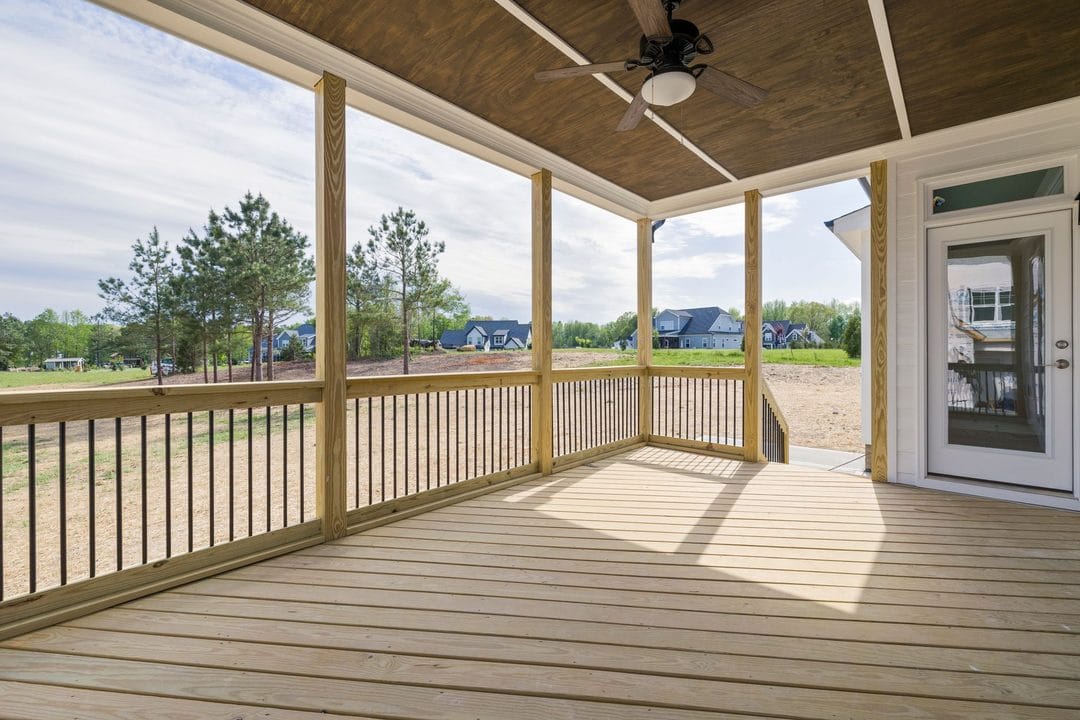
Pull on your deck's railing right now — not a polite touch, but the kind of shove a teenager gives it during a Fourth of July barbecue. If it moves more than an inch, you've just found the reason insurance adjusters dread summer. Deck collapses spike every June through August, and the pattern behind almost all of them is the same: a fastener nobody replaced, a ledger board that was never bolted correctly in the first place, or wood that looked fine from three feet away and had already lost half its structural fiber to rot. Before the first cookout of the season, a deck or porch deserves twenty minutes with a flashlight, a screwdriver, and a level — not because failure is likely, but because the failures that do happen are almost always preventable and almost always ignored until they aren't.
The Ledger Board Is Where Decks Actually Fail
Most attached decks bolt to the house through a single horizontal board called the ledger, and it's the connection structural engineers worry about most. Since the 2009 International Residential Code amendment, ledger boards must be through-bolted or lag-screwed into the house rim joist — not just nailed, which was standard practice through the 1990s and is still what you'll find under older decks across Pennsylvania, Ohio, and much of the Midwest. Flashing matters just as much as the bolts: a strip of metal or vinyl flashing should sit between the ledger and the siding, directing water away from the joint instead of letting it pool and rot the rim joist from behind. Get down on your knees and look at the underside of that connection. If you see nails instead of bolts with washers, if the flashing is missing or rusted through, or if the wood around the lag screws looks dark and swollen, that's not a cosmetic problem — that's the load path for the entire deck resting on compromised wood.
What Rot Looks Like Before It Looks Like Rot
A deck board can look completely solid and still fail a screwdriver test.
Press a flathead screwdriver or an awl into the wood at ground-contact points, stair stringers, and anywhere two boards overlap — the spots that hold moisture longest. Sound wood resists the point; rotted wood lets it sink in with almost no pressure, sometimes an inch or more. Pay particular attention to the tops of support posts where they meet the beam, since water collects in that joint and works from the inside out, which means the damage is often invisible until the wood is already failing. Pressure-treated pine holds up reasonably well for 10 to 15 years in most climates, but that clock resets to zero wherever the protective treatment was cut through — every drilled hole, every on-site saw cut, every spot where a previous repair used untreated lumber. Homeowners in humid regions, the Gulf Coast and the Southeast especially, should plan on a shorter timeline, closer to 8 to 10 years before ground-contact members need real attention.
The Railing Push Test Nobody Runs
Building codes have required 36-inch railings for years, and many jurisdictions now call for 42 inches on decks more than 30 inches off the ground — check with the local building department, since enforcement varies noticeably by county. Balusters should sit no more than 4 inches apart, a rule written specifically so a small child's head can't pass through, and it's worth measuring rather than eyeballing, since even code-compliant decks sometimes sag out of spec after a decade of freeze-thaw cycles. Grab the top rail with both hands and push, sideways and downward, the way a crowd would lean on it during a party. A railing that flexes more than an inch or two under real pressure has a loose post connection, and post connections — not the balusters people tend to blame — are usually the actual cause of railing failures.
Fasteners Are the Part Nobody Budgets For
Every joist hanger, angle bracket, and structural screw on an outdoor deck should be rated for exterior or ground-contact use — hot-dip galvanized at minimum, stainless steel if the lumber is ACQ-treated, since the copper in modern treated wood corrodes standard galvanized coating faster than older CCA treatments did. Simpson Strong-Tie hardware carries the ratings most inspectors look for, and it's cheap enough — a joist hanger runs $2 to $6 at Home Depot or Lowe's — that there's no good argument for reusing hardware pulled off during a repair. Replace any hanger showing rust bleeding through the galvanizing, not just surface rust on the fastener heads; by the time galvanizing fails, the steel underneath is already thinning. And don't assume screws that look alike are rated alike — interior deck screws and structural lag screws sit side by side in the same hardware bin but carry very different shear ratings.
A few signs mean stop using the deck until someone qualified has looked at it, among other structural red flags a casual walk-through won't catch:
- The deck feels bouncy or springy when several people cross it at once
- Visible gaps, daylight, or rust streaks at the ledger-to-house connection
- A screwdriver sinks more than a quarter-inch into any support post at ground level
- Guardrail posts you can rock by hand, even slightly
- Any board split along its length directly over a support beam
Composite Decking Hides Its Problems Better Than Wood Does
Composite boards from Trex, TimberTech, and similar manufacturers get marketed as maintenance-free, and for the boards themselves that claim mostly holds — they don't splinter, they don't need annual staining, and the plank material itself resists rot. The catch is that composite's solid, non-porous surface actually traps moisture against the framing underneath longer than open-grain wood decking does, so the joists and beams supporting a composite deck can be rotting quietly while the walking surface still looks brand new. Check the substructure from below rather than trusting how the top looks, and watch for boards that have started to sag or deflect between joists — composite spans differently than wood and needs blocking at shorter intervals, something a lot of older installs skipped because installers were still working from wood-decking span tables.
Porches Carry Their Own Weak Points
Covered porches add a roof load that open decks don't carry, which shifts the inspection priorities toward the support posts and the connection between post and beam. Wood posts resting directly on concrete without a raised base or post-to-pier hardware will wick moisture up from below regardless of how solid the concrete looks, and that's where porch posts typically rot first — at the bottom few inches, hidden by trim or paint. Tap along the base of each post with a hammer; a hollow or soft sound where a solid thud is expected means the post has already lost integrity. Porch steps deserve the same scrutiny as the porch itself, since stringers exposed to snowmelt and ice all winter rot faster than the deck boards above them, and a loose stringer is often the first thing to give when a group of guests walks down together instead of one at a time.
When a $300 Inspection Beats an Expensive Mistake
A handyman can fix a loose railing post or swap out a rotted board for around $150 to $400, and that's the right call for isolated, visible damage. Structural questions belong to a different category entirely — a sagging ledger connection, a beam split along its length, or any post rotted below the surface calls for a licensed structural engineer, not a deck-building contractor, and that visit typically runs $300 to $600. Skip it and gamble on a full rebuild instead, and the number jumps to $8,000 to $25,000 depending on size and material, before counting what it costs if someone gets hurt on a deck that failed a load test it was never actually given. Don't wait for visible sagging to make that call. By the time a structural problem shows up from a chair on the deck, the safety margin engineers build into these structures has usually already been spent.