The Early-June Deck Staining Window: Why Timing Beats Product Every Time
The two-week window between late May and mid-June is the best time to stain your deck—before peak summer heat ruins adhesion. Here's how to prep, pick the right stain, and apply it so it actually lasts.
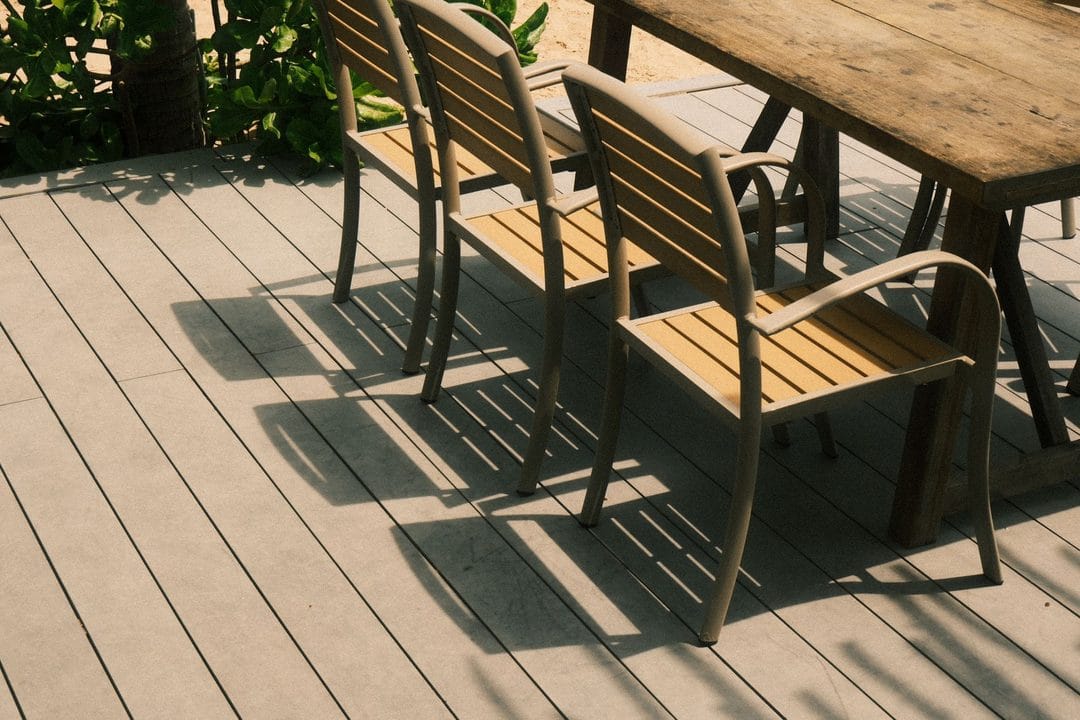
Why the First Two Weeks of June Are the Best Time to Stain Your Deck
The window is short and most homeowners miss it. Once temperatures climb past 90°F and the sun starts beating down from directly overhead, deck stain — whether oil-based or water-based latex — cures poorly, bubbles at the surface, and peels within a season. The sweet spot is roughly May 30 through June 14: daytime temps in the 70s or low 80s, lower UV intensity than peak summer, and enough warmth at night (above 50°F) for the stain to cure properly all the way through the wood grain, not just on the surface.
If you've been putting this off since last fall, stop. A deck that goes into a hot, humid July without a fresh protective coat is one that will need full stripping and reapplication by next spring — a job that costs $400–$900 in materials alone for a 300 sq ft deck, versus $80–$150 to maintain it now.
Read the Wood Before You Buy a Can
Pressure-treated pine, the most common deck lumber in the US, behaves differently from cedar or composite boards. New PT pine — anything installed within the last 18 months — is still off-gassing preservative chemicals and hasn't fully dried. Stain applied too early won't penetrate; it sits on the surface and flakes. Do the water-bead test: splash a handful of water on the boards. If it beads up like water on a car hood, the wood isn't ready. If it soaks in within 30 seconds, you're good to go.
For cedar and redwood, the test still applies, but you're also checking for gray weathering. Grayed cedar has lost its surface oils, which means stain will absorb unevenly unless you use a wood brightener first — a $20–$35 product like Defy Wood Brightener or Olympic Deck Cleaner that opens the grain and neutralizes tannin stains. Skip this step on weathered cedar and you'll get a blotchy finish that looks worse than the gray did.
Oil-Based vs. Water-Based: Make the Call Once and Stick With It
The debate has shifted over the past decade. California and several other states have banned or heavily restricted high-VOC oil-based stains, so if you're in those markets, the decision is made for you. Everywhere else, here's the honest breakdown:
- Oil-based penetrating stains (TWP 100 Series, Armstrong Clark) soak deeper into the wood fiber, last 2–4 years on horizontal surfaces, and are more forgiving on rough-sawn lumber. They also require mineral spirits for cleanup and take 24–48 hours to cure before foot traffic.
- Water-based solid stains (Cabot Australian Timber Oil in water-based, Defy Extreme) clean up with a hose, dry in 4–6 hours, and are better for boards that have already been stained before — they build film on top rather than penetrating, which means they're easier to recoat. The trade-off: they show wear faster on decks with heavy foot traffic or furniture drag.
One thing that's not actually a trade-off: price. Both run $35–$55 per gallon, and a 300 sq ft deck needs roughly 2–3 gallons for a single coat. Buy the right type for your wood condition, not the one that was on sale.
The Prep Work Is 80% of the Job
Ask any painting contractor and they'll say the same thing: stain failure is almost always a prep failure. The stain itself rarely fails. What fails is the bond between stain and wood, and that bond breaks down when there's old stain residue, mill glaze, mildew, or dirt in the grain.
For a deck that was last stained 3–5 years ago with a semi-transparent stain, the minimum prep is a pressure wash at 1,200–1,500 PSI (not higher — you'll raise the grain) followed by a 24-hour dry time. Use a fan tip, not a zero-degree nozzle, and keep it moving. For a deck with peeling solid stain, you need a stain stripper — apply it, let it dwell 20–30 minutes, scrub with a stiff deck brush, then rinse. This adds a full day to the project but there's no shortcut: painting over peeling stain is painting over a problem.
Sand any raised grain with 60-grit on a pole sander after the deck dries. This takes 30 minutes on a 300 sq ft deck and makes a visible difference in how smooth the final coat looks.
Application: Don't Rush the Edges
Start with a 2-inch brush on all the board edges and around any posts, railings, and hardware. Then roll or brush the flat field of each board in the direction of the grain, working in 3–4 board sections. Don't overlap wet stain onto already-drying sections — lap marks show on every stain type and are nearly impossible to blend out after the fact.
One coat is almost always not enough on bare or stripped wood. Two coats with a 4-hour window between them (for water-based) or overnight (for oil-based) is the standard. The second coat is also thinner — you're building finish depth, not flooding the surface with product.
Check the forecast before you start. You need 48 hours of dry weather and temps that stay above 50°F at night. A surprise rainstorm at hour 6 on a fresh coat means starting over — the rain embeds into the uncured stain, leaves watermarks, and breaks the film.
What to Do If You've Already Missed the Window
If July hits and the deck still isn't stained, don't panic — but don't stain in full mid-summer heat either. Wait for a stretch of overcast days when temps stay below 85°F and humidity is below 70%. Early morning application (before 10 AM) on a hot day is also workable: the wood hasn't absorbed much heat yet and the stain has a chance to penetrate before it starts curing on the surface from below. The goal is always: stain soaking in, not baking on.