The July Pool Checklist Every Backyard Owner Actually Needs
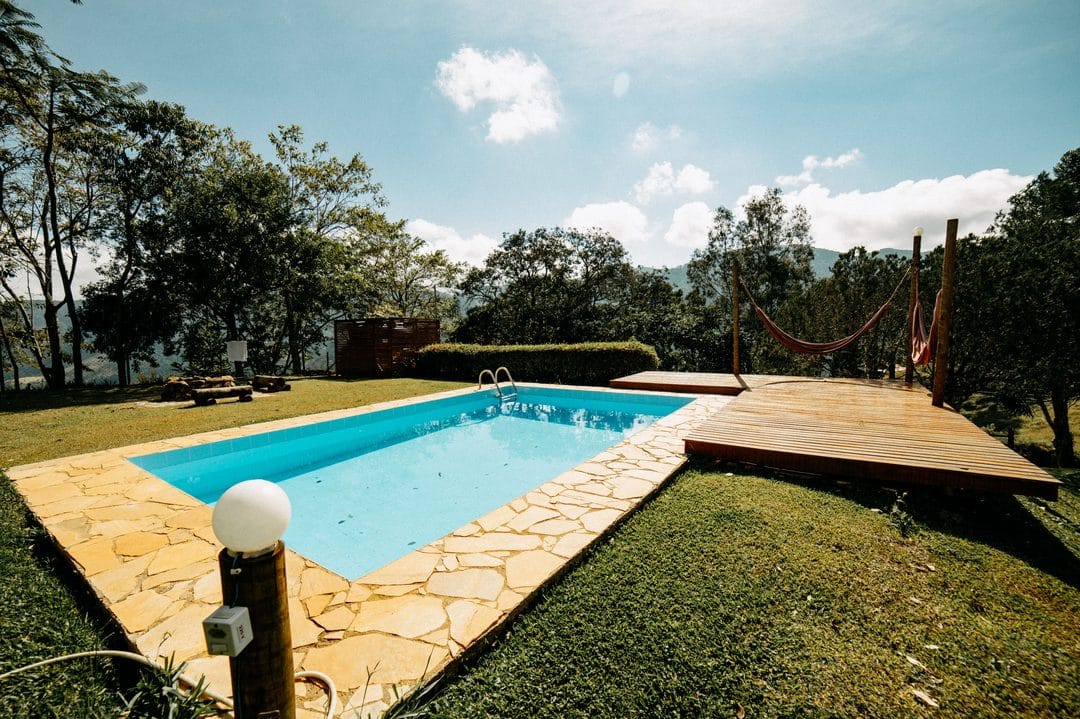
Your pool water hit 89 degrees last Tuesday, and by Thursday the free chlorine reading had dropped to almost nothing. That is not a mystery — it is just July doing what July does to a body of water sitting in direct sun for twelve hours a day. Between the heat, the extra swimmers, and the sunscreen washing off in the water, a backyard pool in peak season needs more attention than the same pool needed in May. Add three teenagers cannonballing off the diving board every afternoon, a few days without rain, and a stretch of 95-degree heat, and the water chemistry that held steady in June can fall apart within 48 hours. Most owners don't adjust their routine until something turns green, the pump starts groaning, or someone gets hurt near the deck.
Why Your Chemistry Falls Apart Faster Right Now
Chlorine burns off in UV light at a rate most people underestimate, and water above 85 degrees accelerates that loss even further. A pool that held a stable 3 ppm free chlorine reading in April can drop to zero within 24 hours in mid-July heat, especially without a stabilizer like cyanuric acid holding the chlorine in place. Leslie's Pool Supplies and most pool professionals recommend keeping cyanuric acid between 30 and 50 ppm during summer months specifically to slow that UV degradation. Morning tests, taken before the pump has run for hours and before swimmers get in, give you the most accurate baseline reading of the day. Test your water at least three times a week during July — not once on Saturday morning before guests arrive.
Buy a real test kit. Test strips from Poolmaster or HTH tell you roughly where you stand, but a liquid reagent kit — the Taylor K-2006 is the industry standard many pool techs still use — gives you an actual number for free chlorine, pH, and total alkalinity instead of a color guess under bad lighting. That kit runs about $50 to $65 depending on where you buy it, and it pays for itself in avoided algaecide and shock treatments within a single summer.
Here's the part that surprises people: overshocking a pool can be just as damaging as undershocking it. Dump too much calcium hypochlorite shock into water that's already at 3 ppm chlorine, and you risk bleaching liner material or vinyl steps, especially in a pool that hasn't been rebalanced in a few weeks. Check before you shock. It's a five-minute step people skip because they're in a hurry to get the kids back in the water.
The Fence Rule That Isn't Optional
Most drowning deaths involving children under five happen in a residential pool, not a public one.
Building codes in the majority of U.S. jurisdictions reference the International Swimming Pool and Spa Code (ISPSC) or a locally adopted equivalent, and the baseline requirement shows up again and again: a barrier at least 48 inches high, fully enclosing the pool, with a self-closing and self-latching gate that swings away from the pool. Chain-link doesn't count on its own — the gaps have to be small enough that a 4-inch sphere can't pass through, which rules out standard chain-link mesh unless it's modified. A self-latching gate hardware kit costs $15 to $30 at Home Depot or Lowe's, and installing one is a weekend afternoon, not a contractor job.
Don't rely on a pool alarm as your only layer of protection. Surface-wave alarms and wearable water-detection alarms both have their place, and a device like the Safety Turtle wearable alarm genuinely helps for households with toddlers, but every layered-protection model — the kind recommended by pediatric safety groups — treats alarms as a backup to a physical barrier, never a replacement for one. A fence that's locked, a gate that latches itself, and constant adult supervision when kids are in or near the water: that combination is what actually prevents the incidents that make local news every summer.
Algae Doesn't Care That You're on Vacation
Green pools in July usually trace back to one of three things: chlorine that dropped too low while nobody was checking, phosphate levels that crept up from fertilizer runoff or leaves, or a filter that hasn't run long enough each day to keep up with bather load. Running your pump only six hours a day worked fine in cooler months. In July, with more swimmers and hotter water feeding algae growth, most pool professionals push that closer to ten or twelve hours, split into two cycles if your area has a lower electricity rate overnight.
A phosphate remover treatment, like the products sold under the Natural Chemistry or PhosFree brands, runs $20 to $35 per bottle and strips the nutrients algae needs before it gets a foothold. Brushing the walls and steps twice a week matters more than people assume — it knocks loose the algae spores clinging to surfaces before they bloom into a visible problem, and a $15 pool brush from Leslie's does the job as well as anything more expensive. Skip the brushing for two weeks during a heat wave, though, and you're often looking at a shock treatment plus a few days of cloudy water before the pool clears again.
When Algaecide Alone Won't Fix It
Algaecide products help, but they are not a substitute for correcting chlorine levels first. Pour algaecide into a pool with zero free chlorine and green water, and you're often just adding a chemical layer on top of the actual problem instead of solving it.
Your Filter and Pump Are Doing Twice the Work
July bather load plus higher water temperature means your filtration system is working harder than it does the rest of the year, and that shows up first in your filter pressure gauge. Twelve hours of daily runtime sounds excessive until you count the actual bather load and the algae risk that comes with 90-degree water. A cartridge filter that needs cleaning every three to four weeks in spring might need attention every 10 to 14 days once a family of four is swimming daily and reapplying sunscreen. Rinse cartridge elements with a garden hose, not a pressure washer — the fine pleats tear under high pressure, and a replacement cartridge from Pentair or Hayward runs $60 to $110 depending on your filter model.
- Sand filter media should be backwashed when pressure rises 8 to 10 psi above the clean, freshly backwashed reading
- DE filter grids need a full teardown and inspection at least once per season, ideally in July when the load is heaviest
- Pump baskets and skimmer baskets should be emptied every two to three days during peak swimming weeks, not weekly
A variable-speed pump, like Pentair's IntelliFlo or Hayward's TriStar VS, costs more upfront — installed pricing typically lands between $1,200 and $1,900 — but it lets you run longer filtration cycles at low speed without the electricity bill of a single-speed pump running full blast for twelve hours. Owners who made the switch two or three summers ago are usually the ones who aren't panicking about pump noise or a spiked power bill in the middle of a heat wave right now.
The Deck Gets Dangerously Hot Before the Water Does
Concrete and standard pavers can reach temperatures above 125 degrees on a sunny July afternoon, hot enough to cause second-degree burns on bare feet within seconds of contact — a risk that's easy to forget about when everyone's focused on the water itself. Light-colored concrete, textured coatings, and materials like KoolDeck or a rubberized deck coating stay noticeably cooler than dark pavers or plain gray concrete, and a resurfacing project runs anywhere from $4 to $8 per square foot depending on the material and contractor.
Keep a pair of water shoes by the pool gate for barefoot guests who aren't used to hot concrete, and hose down the deck before letting toddlers walk across it midday. But older pool decks with cracks or heaving sections deserve a look too — a cracked, sun-softened surface is both a trip hazard and a spot where standing water breeds mosquito larvae after the next thunderstorm rolls through.